
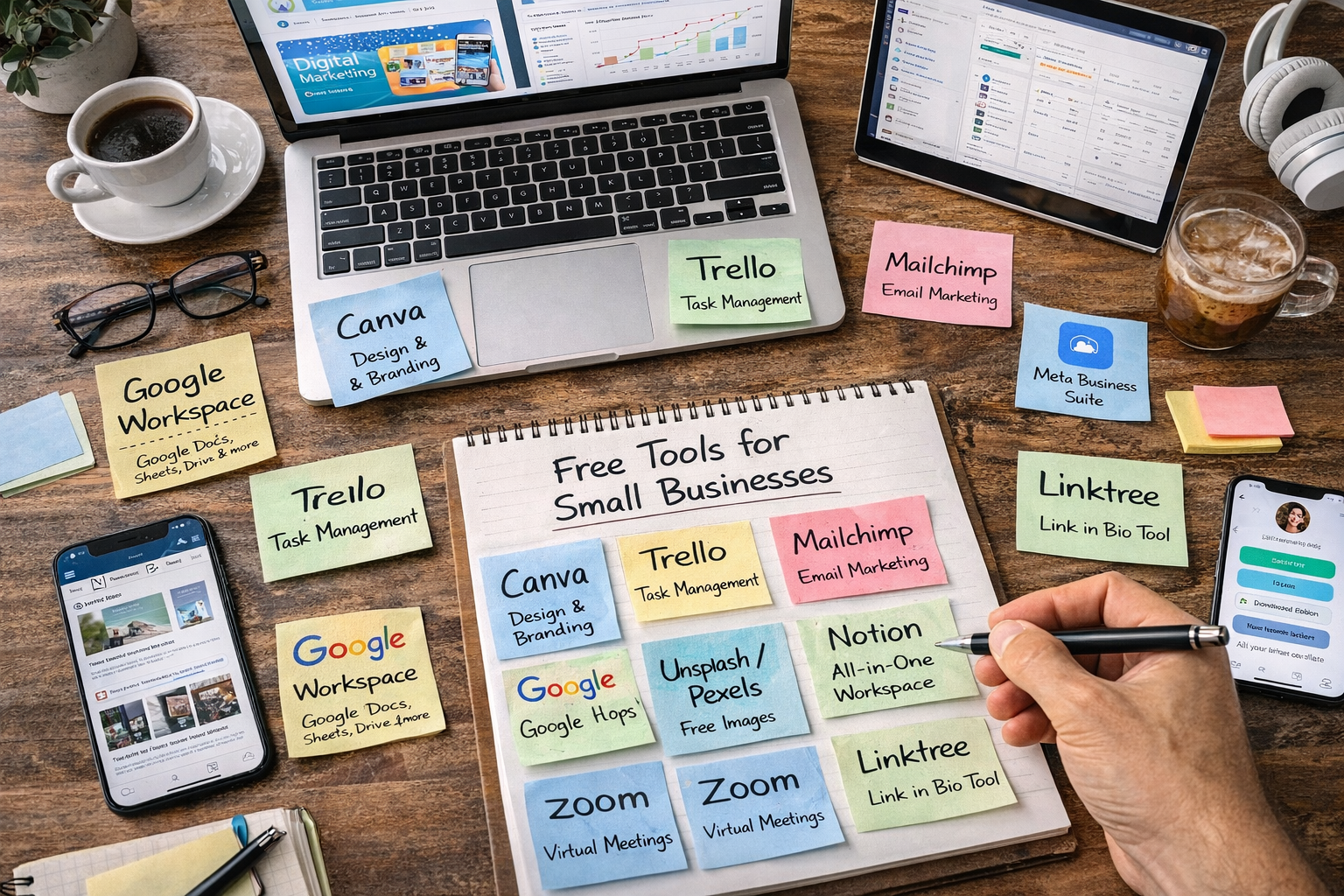
Running a small business doesn’t mean you need a big budget — especially when it comes to tools. There are dozens of free (and powerful) platforms that can help you streamline your operations, attract customers, and stay organized.
In this article, we’ll explore the best free tools across different areas of your business — so you can work smarter, not harder.
1. Canva – For Design and Branding
What it does:
Canva lets you create professional-looking designs — even if you’re not a designer.
Use it for:
- Instagram posts
- Logos
- Business cards
- Presentations
- Flyers and brochures
- Website banners
Why it’s great:
- Drag-and-drop interface
- Free templates
- Mobile-friendly
2. Trello – For Task and Project Management
What it does:
Trello helps you stay organized with boards, lists, and cards. It’s perfect for tracking tasks, planning content, or managing projects.
Use it for:
- To-do lists
- Editorial calendars
- Client project tracking
- Launch planning
Why it’s great:
- Simple visual layout
- Collaborate with teams
- Syncs across devices
3. Google Workspace – For Productivity
What it does:
Google’s free tools are a must-have for any entrepreneur.
Use:
- Google Docs for writing proposals and blog posts
- Google Sheets for budgeting and tracking
- Google Forms for surveys
- Google Drive for cloud storage
- Google Calendar for scheduling
Why it’s great:
- Free with a Gmail account
- Easy sharing and collaboration
- Autosave feature
4. Mailchimp (Free Tier) – For Email Marketing
What it does:
Build and manage email lists, automate messages, and track engagement.
Use it for:
- Sending newsletters
- Welcome emails for new customers
- Abandoned cart reminders
- Product launch announcements
Why it’s great:
- Up to 500 contacts for free
- Built-in templates
- Analytics dashboard
5. Meta Business Suite – For Social Media Scheduling
What it does:
This is Facebook’s and Instagram’s official free tool for managing content and engagement.
Use it to:
- Schedule posts
- Reply to DMs and comments
- View performance insights
- Manage ads (optional)
Why it’s great:
- Free and built-in for Meta platforms
- Helps you stay consistent
6. Unsplash & Pexels – For Free Images
What it does:
Need professional-quality images without paying for stock photos?
Use these platforms to:
- Find royalty-free images for blog posts, social media, websites, and more.
Why they’re great:
- High-quality, free for commercial use
- No attribution required (but appreciated)
7. Grammarly – For Better Writing
What it does:
Grammarly checks your spelling, grammar, tone, and clarity — great for emails, blog posts, or website copy.
Why it’s great:
- Works in your browser or email
- Helps you write professionally
- Suggests improvements in real time
8. Notion – All-in-One Business Hub
What it does:
Notion is perfect for organizing every part of your business — from goals to content to finance.
Use it for:
- Business plans
- SOPs (standard operating procedures)
- Meeting notes
- Launch tracking
- Product ideas
Why it’s great:
- Totally customizable
- Free for individuals
- Can replace Trello, Docs, and more
9. Zoom – For Virtual Meetings
What it does:
Whether you’re meeting with clients, collaborating with freelancers, or hosting a webinar, Zoom is a reliable video platform.
Why it’s great:
- Free plan includes 40-min meetings
- Screen sharing
- Recording features
🔗 zoom.us
10. Linktree – For Managing Multiple Links in Bio
What it does:
If you’re using social media platforms that only allow one link in the bio (like Instagram or TikTok), Linktree helps you create a mini landing page with multiple links.
Use it for:
- Website
- Blog
- Product pages
- Free downloads
How to Choose the Right Tools for Your Business
You don’t need to use every tool listed. Start with what solves your most immediate need.
Ask yourself:
- Where am I wasting time?
- What’s causing confusion or disorganization?
- What tasks can I automate or simplify?
Then explore tools that directly solve those problems.
Final Thoughts: Leverage Free Tools to Grow Faster
You don’t need to spend a lot of money to run a professional, organized, and productive business. With the right set of free tools, you can save time, reduce stress, and focus on what matters most: growing your business.
Start with 2–3 of these tools and build from there. The goal isn’t to use more tools — it’s to use the right tools for where you are today.