
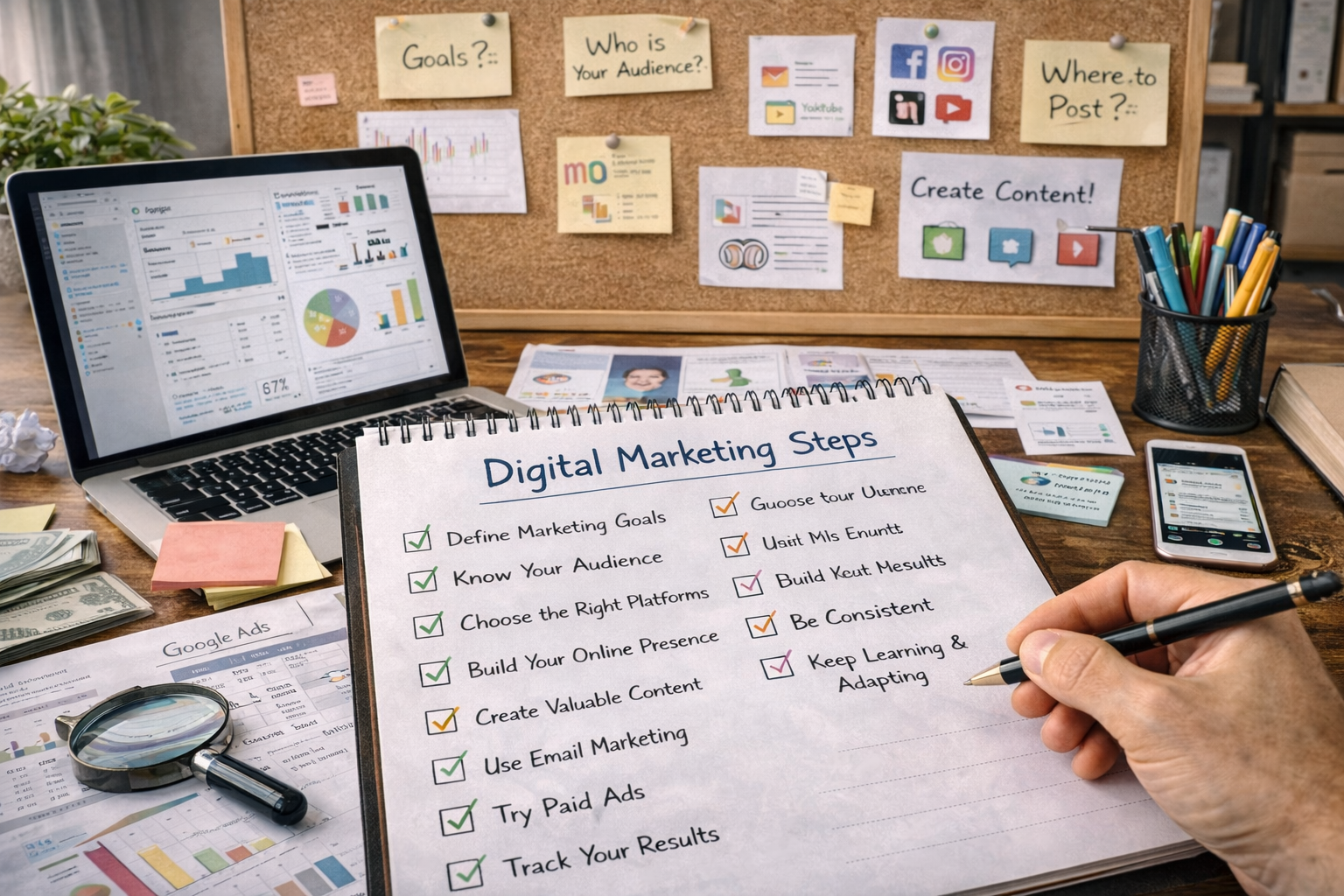
Digital marketing can feel overwhelming at first — with so many tools, platforms, and strategies to choose from. But if you’re a small business owner just starting out, the key is to start simple and strategic.
In this article, we’ll walk you through the basics of digital marketing and show you how to build a strong online presence without needing a big budget.
What Is Digital Marketing?
Digital marketing is the use of online tools and platforms to promote your business and connect with potential customers. It includes:
- Social media marketing
- Search engine optimization (SEO)
- Email marketing
- Content creation (blogs, videos, etc.)
- Paid advertising (Google Ads, Facebook Ads)
- Influencer partnerships
- And more
The goal is to increase visibility, build trust, and generate leads or sales.
Why Digital Marketing Matters for Small Businesses
No matter what industry you’re in, your customers are online. Having a strong digital presence helps you:
- Reach more people beyond your local area
- Compete with larger brands
- Build long-term customer relationships
- Track and measure your results
- Market 24/7 without needing a huge team
It levels the playing field for small businesses.
Step 1: Define Your Marketing Goals
Before you create content or run ads, know what you’re aiming for. Ask yourself:
- Do I want to get more traffic to my website?
- Do I want people to book a call or visit my store?
- Am I trying to build brand awareness or increase sales?
Set SMART goals (Specific, Measurable, Achievable, Relevant, Time-bound).
Example: “Get 100 email subscribers in the next 30 days.”
Step 2: Know Your Audience
Everything in digital marketing revolves around your target audience.
Who are they? Where do they spend time online? What problems are they trying to solve?
Use:
- Customer personas
- Social media insights
- Google Analytics
- Surveys and interviews
The better you know your audience, the easier it is to create content that converts.
Step 3: Choose the Right Platforms
You don’t need to be everywhere. Focus on 1–2 platforms where your ideal customer already spends time.
Here’s a quick guide:
- Instagram: Great for visual brands (fashion, food, lifestyle)
- Facebook: Good for community building and ads
- LinkedIn: Best for B2B and professionals
- TikTok: Ideal for creative, short-form video content
- YouTube: Excellent for tutorials and long-form video
- Pinterest: Powerful for DIY, design, food, and lifestyle
Start small. Master one platform before adding more.
Step 4: Build Your Online Presence
At a minimum, you should have:
- A website or landing page with your offer
- A Google Business Profile (for local SEO)
- Active social media profiles that reflect your brand
- A call-to-action on everything (e.g., “Book Now”, “Get a Free Quote”)
You don’t need perfection — just clarity and consistency.
Step 5: Create Valuable Content
Content marketing helps you attract and educate potential customers without selling directly.
Types of content to try:
- Blog posts (how-to guides, tips, tutorials)
- Social media posts (reels, carousels, quotes)
- Videos (behind the scenes, product demos, interviews)
- Infographics and visuals
- Email newsletters
Your content should:
- Answer common questions
- Solve problems
- Showcase your expertise
- Tell your story
Always end with a clear next step (CTA).
Step 6: Use Email Marketing to Build Relationships
Email is still one of the most powerful digital marketing tools — and it’s free or low-cost.
What to do:
- Offer a freebie (lead magnet) to get subscribers
- Send regular newsletters with tips, updates, or offers
- Segment your list based on interests or behavior
- Track open rates and click-through rates
Use tools like:
- Mailchimp
- ConvertKit
- Brevo (formerly Sendinblue)
Step 7: Try Paid Ads (When You’re Ready)
Paid ads can accelerate your growth, but only after you’ve validated your message and offer.
Start small:
- Run $5–10/day test ads on Facebook or Instagram
- Use Google Ads for specific search terms
- Track results and refine your targeting
Always set a budget and measure ROI (return on investment).
Step 8: Track Your Results
Don’t fly blind. Use analytics to measure what’s working and what’s not.
Track:
- Website visits (Google Analytics)
- Social media engagement (likes, shares, saves)
- Email open/click rates
- Sales or conversions
Ask yourself monthly:
“What’s generating the most value for my business?”
Then do more of that.
Step 9: Be Consistent
You don’t need to post every day. But you do need to be consistent.
Create a simple content schedule you can stick to:
- 2 Instagram posts per week
- 1 blog post per month
- Weekly email newsletter
Use scheduling tools like Buffer, Later, or Meta Business Suite to save time.
Step 10: Keep Learning and Adapting
Digital marketing changes fast — but that’s a good thing. It means you can keep improving.
Stay current by:
- Following marketing blogs or YouTube channels
- Taking short online courses
- Joining communities or masterminds
- Testing new ideas regularly
What worked six months ago may not work now — stay flexible.
Final Thoughts: Start Simple, Stay Focused
You don’t need a big team or budget to succeed in digital marketing. You just need a clear goal, a deep understanding of your audience, and the willingness to show up consistently.
Start with the basics. Track your progress. Adjust as you grow.
The digital world is full of opportunity — and your business deserves to be seen.