
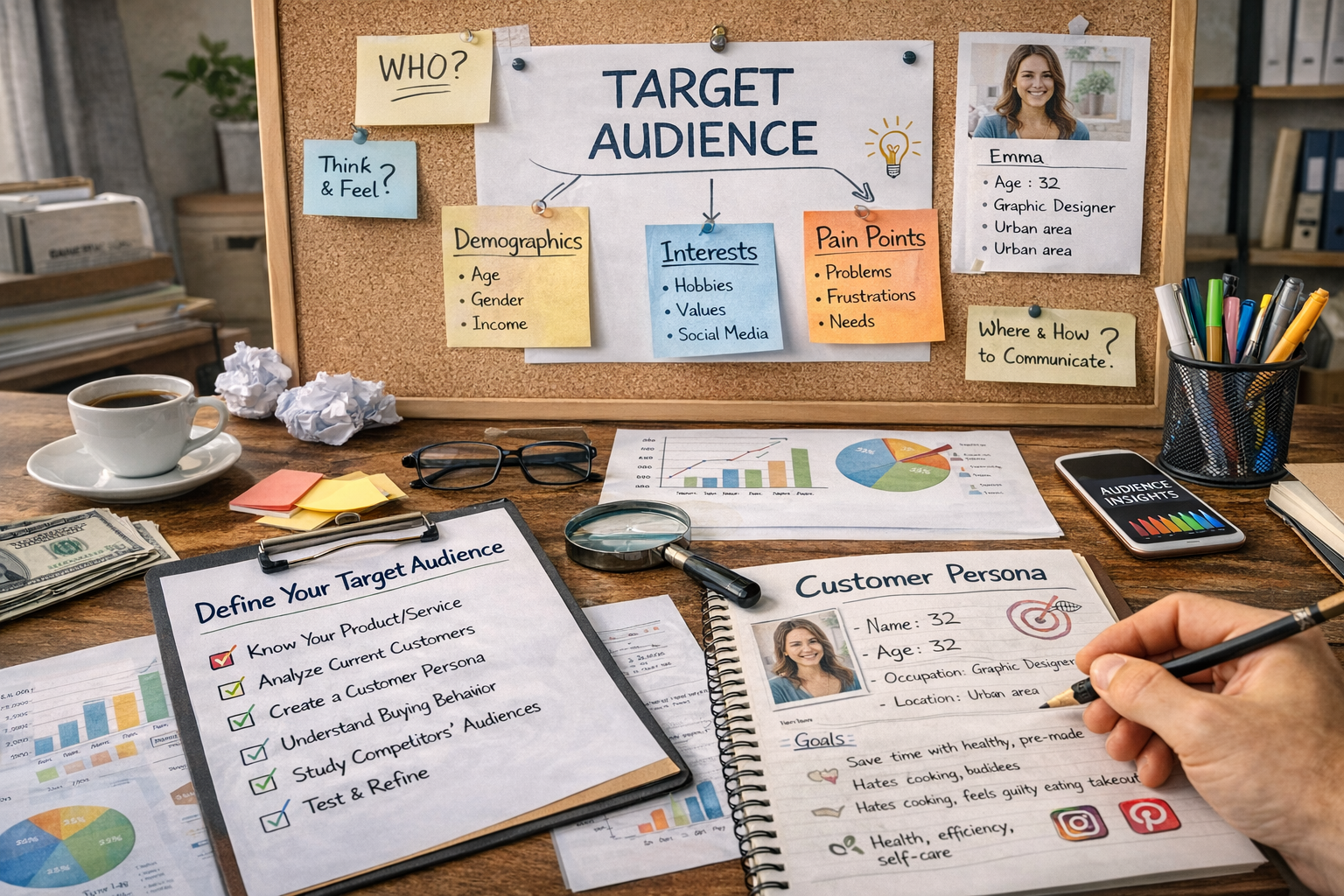
Many new entrepreneurs make the mistake of trying to sell to everyone. But in reality, when you try to reach everyone, you reach no one. Defining your target audience is one of the most powerful steps you can take to grow your business strategically.
In this article, you’ll learn how to identify, understand, and connect with the ideal people who are most likely to buy from you.
What Is a Target Audience?
Your target audience is the specific group of people who are most likely to need or want your product or service. They are united by shared characteristics such as:
- Demographics (age, gender, income)
- Psychographics (interests, values, habits)
- Behaviors (buying decisions, challenges, goals)
- Location (local, national, global)
Understanding your target audience helps you speak directly to their needs, increasing the chances of turning them into loyal customers.
Why Defining Your Audience Matters
Here’s what happens when you clearly define your audience:
- Your marketing becomes more focused and cost-effective
- You create better products or services
- Your content resonates and builds trust
- You attract qualified leads (not just anyone)
In short, it helps you grow faster and smarter.
Step 1: Analyze Your Product or Service
Start by understanding what problem your business solves.
Ask yourself:
- What need does your product fulfill?
- What pain points does it address?
- Why should someone choose you over competitors?
This clarity helps you match your offer with the people who need it most.
Example:
If you sell eco-friendly skincare products, your ideal customer might be someone who values sustainability, avoids harsh chemicals, and prefers natural beauty routines.
Step 2: Look at Your Existing or Ideal Customers
If you already have customers, study them. If not, think about your ideal customer.
Look for:
- Age range
- Gender identity
- Occupation
- Income level
- Interests and hobbies
- Values and lifestyle
- Location
You can gather this data through:
- Surveys
- Social media insights
- Google Analytics
- Customer interviews
- Competitor audience research
Step 3: Create a Customer Persona
A customer persona (also called a buyer persona) is a fictional, detailed profile of your ideal customer.
Include details like:
- Name: Emma
- Age: 32
- Occupation: Graphic Designer
- Location: Urban area
- Goals: Wants to save time with healthy, pre-made meals
- Pain Points: Hates cooking, feels guilty eating takeout
- Values: Health, efficiency, self-care
- Favorite Platforms: Instagram, Pinterest
The more specific you are, the easier it is to craft targeted marketing messages.
Step 4: Understand Their Buying Behavior
Go deeper into how your audience shops and makes decisions.
Questions to consider:
- Where do they look for information? (Google, YouTube, TikTok?)
- Do they prefer video, blog posts, podcasts?
- What influences their decisions? (reviews, influencers, friends?)
- What are their objections or hesitations?
This insight helps you build trust and remove obstacles in their buying journey.
Step 5: Study Your Competitors’ Audiences
Competitor analysis can give you quick insights.
Look at:
- Who follows them on social media?
- What kind of content gets engagement?
- What language do they use in ads or posts?
- What do customers say in reviews?
You might find underserved segments or ways to differentiate your brand.
Step 6: Test and Refine
Don’t expect to get your audience perfectly defined on the first try.
Marketing is an ongoing process of testing and learning.
Try different:
- Ad creatives
- Messaging styles
- Offers
- Content formats
Track what gets the best results and adjust your persona as needed.
Step 7: Segment Your Audience (Optional but Powerful)
As your business grows, you may discover you have more than one type of ideal customer.
For example:
- A fitness coach might serve both busy moms and young athletes.
- A marketing agency might work with local businesses and online coaches.
In this case, create multiple personas and tailor your content to each segment.
Step 8: Use Your Audience Insights in Every Area
Once you’ve defined your target audience, apply what you’ve learned everywhere:
- Website copy
- Social media content
- Product design
- Customer service
- Email marketing
The more your business speaks your audience’s language, the more connected — and loyal — they become.
Final Thoughts: Know Who You’re Talking To
Defining your target audience isn’t just a one-time task — it’s a foundation for everything else you do.
The better you know your audience, the easier it is to create offers, content, and experiences they’ll love. That leads to more conversions, more referrals, and more success.
Remember: you’re not trying to reach everyone.
You’re trying to reach the right people — and speak to them like no one else can.